
Green Ribbon Champions: Restoring Ontario’s Critical Dune Ecosystems
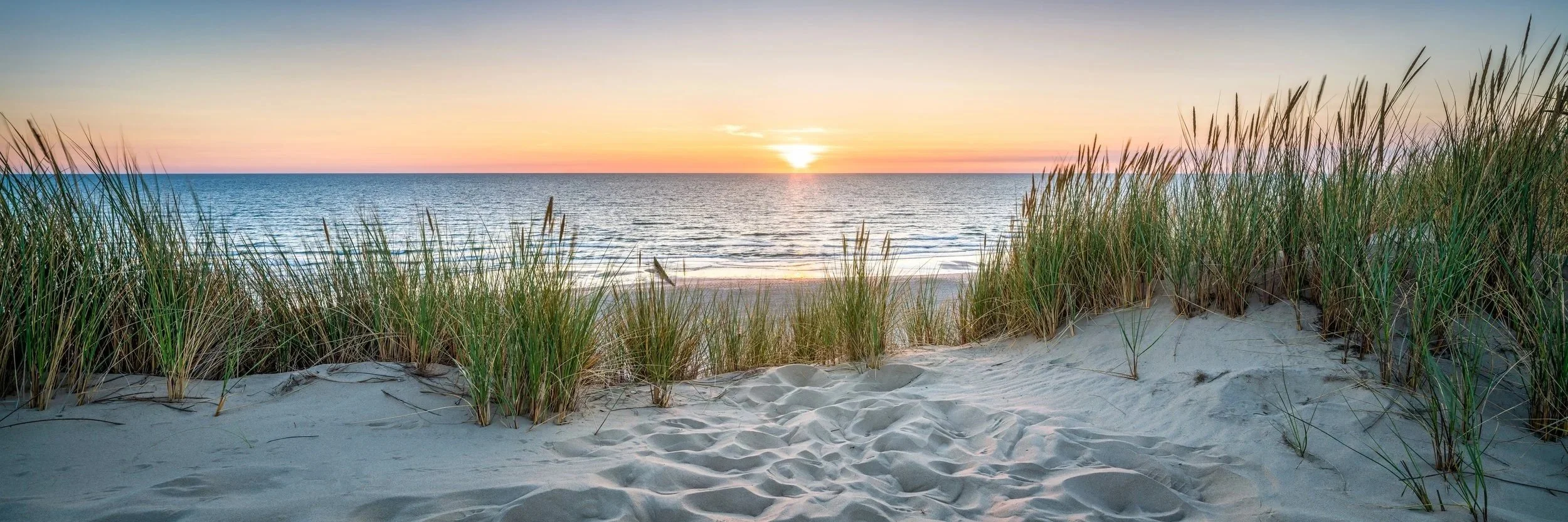
The sun sets over a Lake Huron dune shoreline.
The beach-dune shorelines of Lake Huron are an iconic landscape of the Great Lakes, attracting thousands of people who swim and sunbathe on these sugar sands every summer. Healthy, intact dunes provide a range of benefits for coastal communities including shore protection, water purification, biological diversity, erosion control and better beaches. They’re also one of the most rare and fragile ecological features in North America — amounting to less than three percent of the 6,000+km Lake Huron coast — and increasing pressure from people and climate events spells trouble for at-risk species, water quality and our communities.
Lake Huron Coastal Centre (LHCC) works with landowners in Ontario to protect and restore these fragile but critical ecosystems. Through its Green Ribbon Champion program, LHCC provides lakeshore landowners first with an assessment of their shorelines, followed by stewardship recommendations to conserve existing dunes and on-the-ground efforts to reestablish degraded dune habitats.
From 2019 through 2023, LHCC staff assessed 150 shoreline properties across three Ontario communities — Huron-Kinloss, Kincardine and Saugeen Shores — and provided guidance for those landowners on proper equipment storage, beach access pathways and invasive species management. As part of the program, LHCC staff and volunteers installed 1.5km of sand fencing, filled and removed 100 bags of invasive plants, placed 60 information signs at protected dune areas and planted native grasses to naturally stabilize shifting sands. In all, 7.5km of Ontario’s shoreline has been restored through the program.
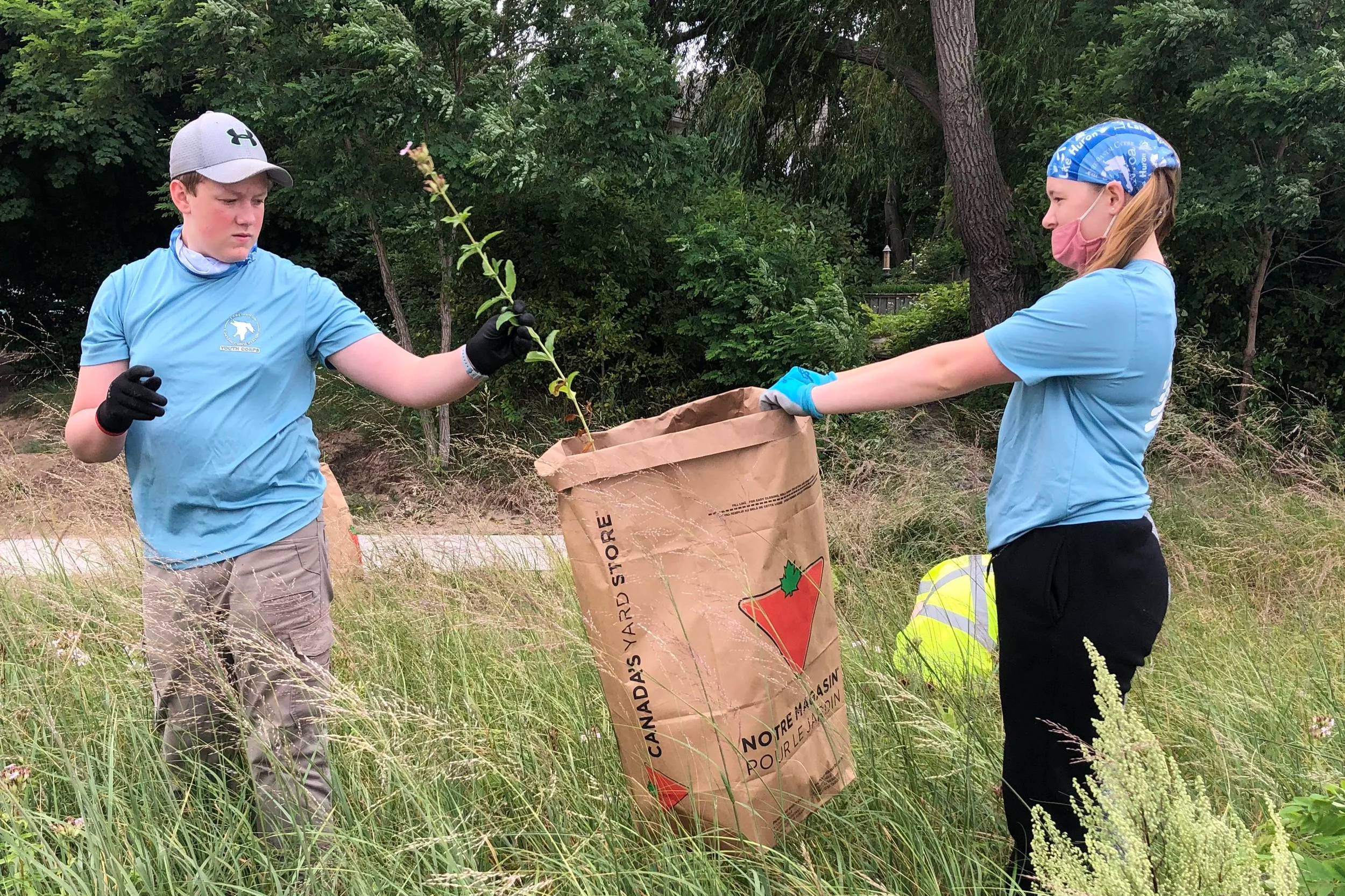
Volunteers pull invasive plants from a dune ecosystem.
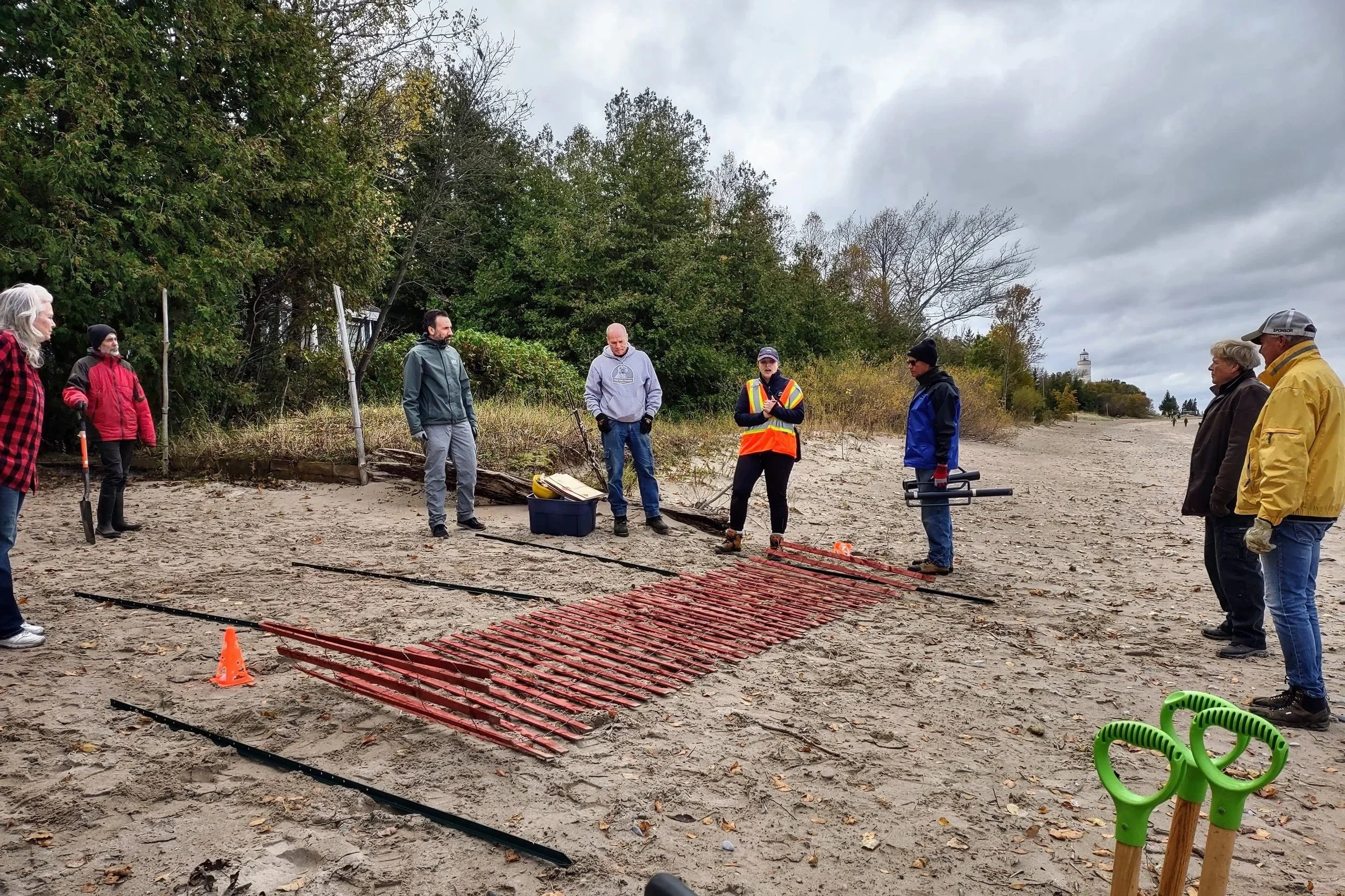
Lake Huron Coastal Centre staff and volunteers prepare to install sand fencing on a beach to restore degraded sand dunes.
“We use sand fencing and planting in tandem,” said Meredith Watson, LHCC Stewardship Program Coordinator. “Sand fencing traps windblown sand which can be really effective to quickly build up a dune; however, this is not a long-term measure, so planting dune vegetation helps stabilize coastal dunes for the long term. Once plants are established, there’s less need for a fence and it can be removed, leaving a more natural shoreline.”
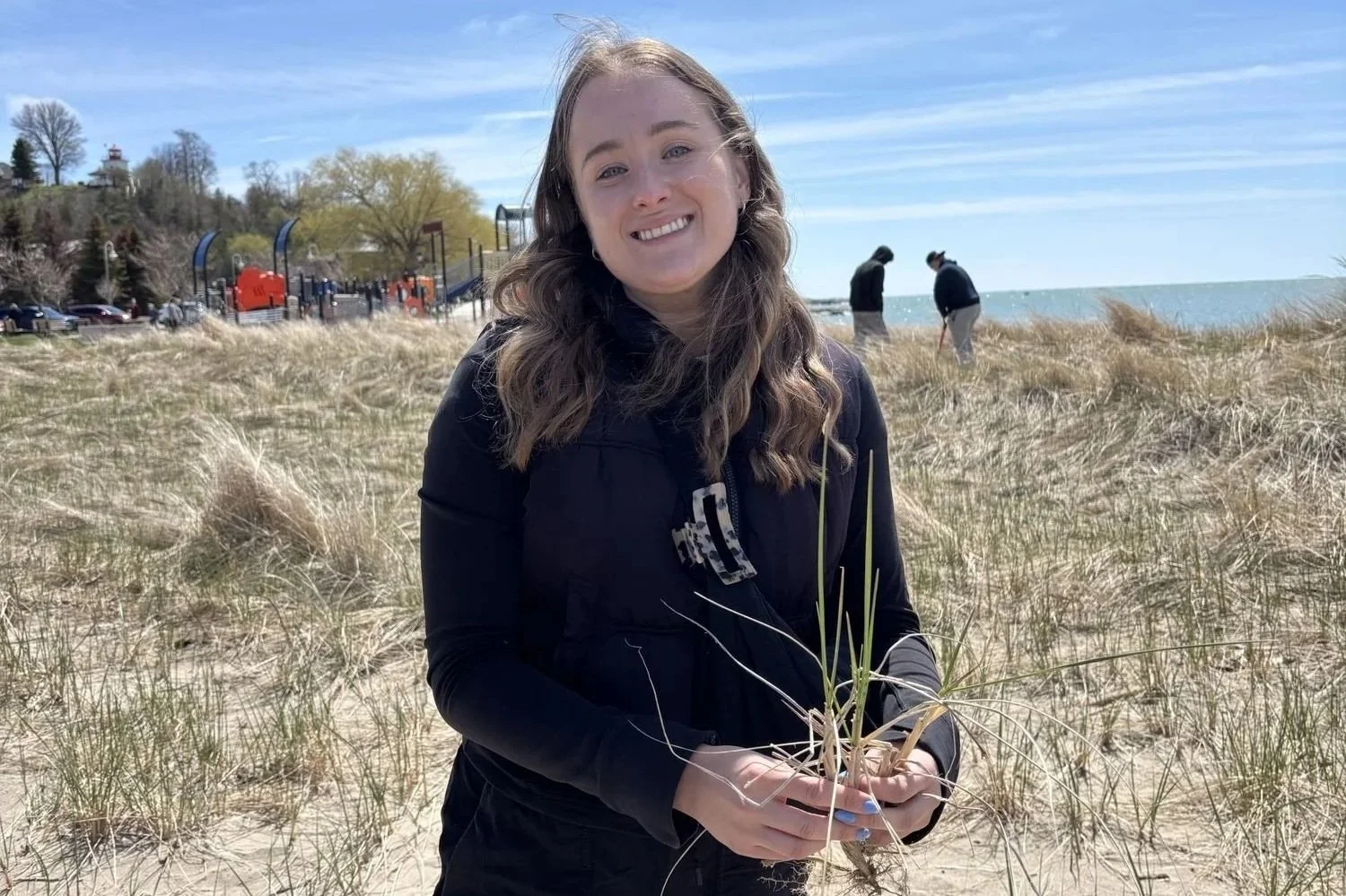
Meredith Watson
LHCC is reviving the program in 2026, revisiting with past participants to conduct follow-up site assessments and provide continued guidance where it’s needed. Additionally, LHCC will be hosting educational workshops and volunteer restoration opportunities this season and will extend the Green Ribbon Champion Program to new sites in 2027. Residents and prospective volunteers can follow LHCC on Facebook and Instagram or sign up for their newsletter.
Lake Huron Coastal Centre is based in Goderich, Ontario’s first Lake Huron Forever community. They are leaders in the Lake Huron Forever initiative, bringing expertise in water quality, biodiversity, climate change and coastal processes to communities in Ontario and throughout the Great Lakes region. Learn more at lakehuron.ca.
Photos courtesy LHCC